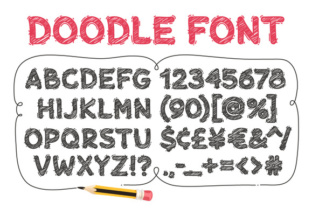
Doodle: A Versatile Display Font for Creative Branding
There’s something oddly satisfying about opening a blank brand board and staring at it, waiting for inspiration to strike. That’s when I decided to test Doodle on a recent boutique identity project. As a display font, Doodle immediately caught my eye—not just for its visual appeal, but for how it could elevate the entire brand feel without overpowering the design. It’s a font that feels both modern and approachable, with a personality that leans slightly whimsical yet professional enough for commercial use.
Doodle for Web Design and Digital Branding
When I first placed Doodle on the homepage hero section of the boutique’s website, it felt like a natural fit. The font’s clean lines and subtle curves gave it a friendly yet polished look, which is essential for online branding. As a display font, Doodle works exceptionally well in headlines and short phrases, making it ideal for web design projects where visual hierarchy is key. Its versatility allows it to adapt to different digital platforms, from social media graphics to app interfaces.
One of the standout features of Doodle is its file format variety—AI, EPS, JPG, PNG, OTF, and more. This makes it incredibly practical for designers who need to work across multiple mediums. Whether you’re exporting assets for a website or preparing print-ready files for a booklet, Doodle offers the flexibility to maintain consistency without sacrificing quality.
Doodle for Print Design and Packaging Mockups
I tested Doodle on a packaging mockup for a new skincare product line, and it performed admirably. The font’s readability at smaller sizes made it suitable for labels and tags, while its decorative elements added a touch of elegance. When paired with a sans serif body text, Doodle helped create a balanced composition that felt both modern and trustworthy.
For printed materials like posters or brochures, Doodle’s vector formats ensure crisp output, even when scaled up. The transparent PNGs were especially useful for creating layered designs, allowing the font to blend seamlessly into the overall aesthetic. It’s a font that can transition smoothly from screen to print, making it a valuable asset for any designer working on mixed-media projects.
Doodle for Logo Design and Brand Identity
When designing a logo for a local café, I found myself drawn to Doodle’s ability to convey warmth and approachability. Its slightly rounded edges and organic flow made it perfect for a brand that wanted to feel inviting and community-focused. I used it as the primary typeface in the logo, complementing it with a bold sans serif for the tagline.
Doodle’s character set also includes alternate styles and ligatures, which allowed me to customize the logo further. These small details can make a big difference in how a brand is perceived. However, I would caution against using Doodle for long body text or formal corporate branding, as its decorative nature might not translate well in more traditional contexts.
Doodle for Social Media Graphics and Editorial Design
Social media is a space where typography plays a crucial role in capturing attention. I used Doodle in a series of Instagram posts for a handmade shop, and it worked beautifully. The font’s playful yet refined style matched the brand’s ethos perfectly, helping to build a cohesive visual identity across all platforms.
In editorial design, Doodle’s readability at larger sizes made it a great choice for headlines and pull quotes. I paired it with a serif font for body text, creating a contrast that enhanced the visual storytelling. Its ability to adapt to different design scenarios makes it a go-to font for creative studios and freelancers looking for a versatile tool in their toolkit.
Doodle for Commercial Use and Licensing Considerations
Before recommending Doodle for client work, I always check the licensing terms. This font is designed for commercial use, which means it can be safely applied to brand identity, packaging, websites, and other design assets. However, it’s important to review the specific license agreement to ensure compliance, especially if you’re planning to use it in print-on-demand products or digital templates.
Additionally, Doodle’s support for multilingual characters is a plus for designers working on international projects. The font’s inclusion of swashes and alternates adds another layer of customization, allowing for greater creativity in design assets. For those who rely on webfonts, Doodle’s availability in OTF and WOFF formats ensures compatibility with most platforms.
Ultimately, Doodle is a font that deserves a place in your design toolkit. Whether you’re working on a boutique identity, a café refresh, or a skincare brand, its versatility and charm make it a standout choice. Just remember to test it in real-world scenarios before committing to a full project—and always double-check the licensing terms to avoid any surprises.